5 terms observed in the article for this week (2):
[A. Nouira et. al CrystalGAN: Learning to Discover Crystallographic Structures with Generative Adversarial Networks. http://ceur-ws.org/Vol-2350/paper18.pdf (accessed Feb. 18, 2022)]. Highly specialized terms
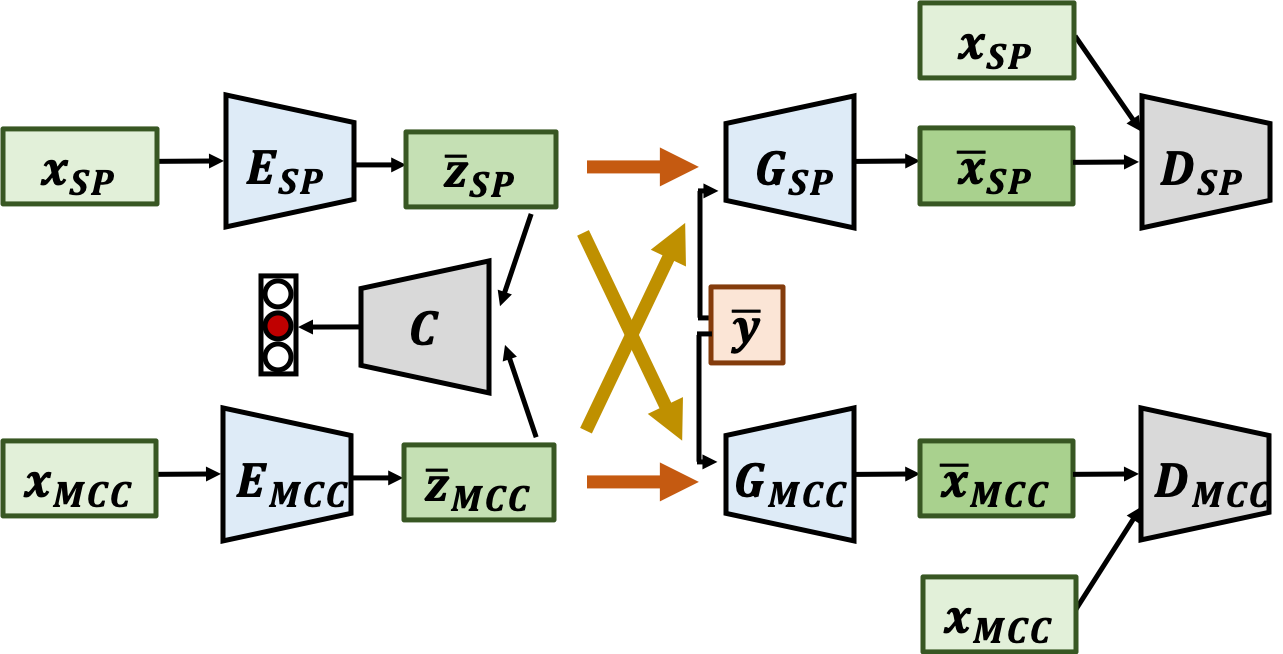
This article was not published in a reputable journal but becomes the basement of several other highly-cited articles. This pioneering work on the crystal conditioned generative networks (GAN) is cited in most cases of GAN's implementations in materials science as the first universal model for crystal structure prediction. Additionally, this work can suggest the problem Cross-Domain GAN solution of high complexity as well as high effectiveness.
Augmented Complexity
phrase [verb + noun]
The term denotes an obtaining of the complexity of generated samples that are much higher than the complexity of training samples. A very known goal of generative machine learning models.
Example: However, as we have already mentioned before, none of these methods generates crystal data of augmented complexity.
ru: комплексность/сложность более высокого порядка (в терминологии машинного обучения)
Cross-domain learning
phrase
Definition related to the machine learning topic.
The cross-domain learning problem can be summarized as follows only in mathematical form. Let D{t} denote the target data set, which consists of two subsets: the labeled subset D{lt} and the unlabeled subset D{ut}. Let (x{i},y{i}) denote a data point where x{i} is a d-dimensional feature vector and y{i} is the corresponding class label. Possible case of related problem is binary classification problem, i.e., y{i} = {+1, −1}. In addition to D{t}, we have a source data set D{s} whose distribution is different from but related to that of D{t}. A binary classifier f{s}(x) has already been trained over this source data set D{s}. Our goal is to learn a classifier f(x) to classify the unlabeled target subset D{ut}.
Since D{t} and D{s} have different distributions, f{s}(x) will not perform well for classifying D{ut}. Conversely, we can train a new classifier f{t}(x) based on D{lt} alone, but when the number of training samples |D{lt}| is small, f{t}(x) may not give a robust performance. Since D{s} is related to D{t}, utilizing information from source D{s} to help classify target D{ut} should yield better performance. This is the fundamental motivation of cross-domain learning.
[https://www.ee.columbia.edu/ln/dvmm/publications/08/xdomain_dvmm08.pdf]
Example: The GANs were already exploited with success in cross-domain learning applications for image processing.
ru: кросс-доменное обучение
Environmental constraints
phrase [adjective + noun]
Сontextual:
conditions limiting the possibilities of describing crystal structures, which follow directly from physical laws and the concept of symmetry, for example, Born-Karman boundary conditions, conditions for the atomic packing density, limiting the existence of fifth-order symmetry axes, etc.
Example: We integrated geometric constraints proposed by crystallographic and materials science experts to satisfy environmental constraints, and to increase the rate of synthesized stable ternary compounds.
ru: ограничения окружения
Feature Transfer
phrase [noun+noun]
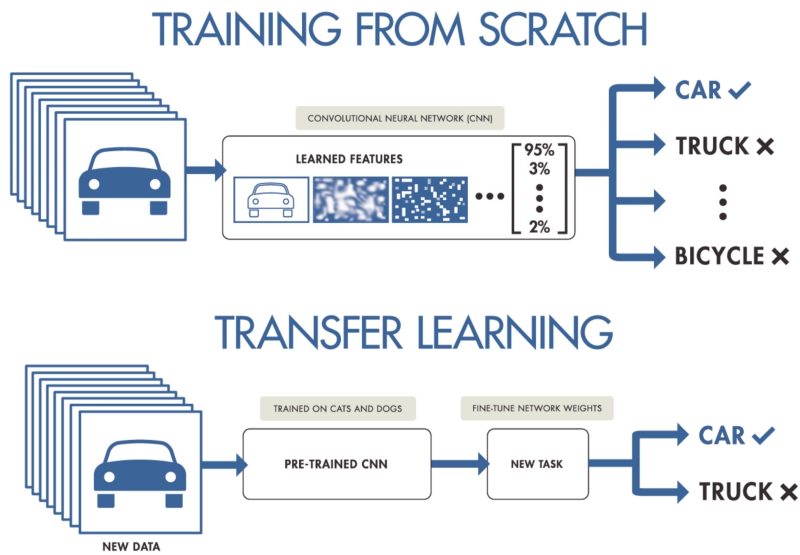
Transfer learning (TL) is a research problem in machine learning (ML) that focuses on storing knowledge gained while solving one problem and applying it to a different but related problem. For example, knowledge gained while learning to recognize cars could apply when trying to recognize trucks [https://en.wikipedia.org/wiki/Transfer_learning].
Example: The proposed method is called CrystalGAN, and it consists of two cross-domain GAN blocks with constraints integrating prior knowledge including a feature transfer step.
ru: перенос признаков
Generator and Discriminator
noun
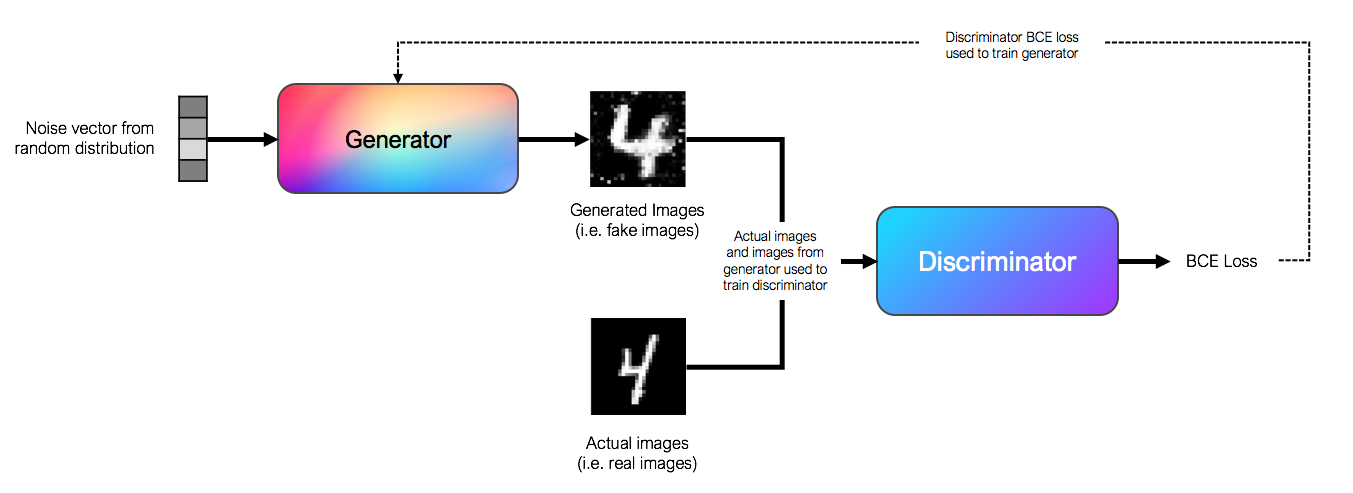
It's a pair of machine learning algorithms that are competing to achieve better performance. The human ability to produce anything new works just like this net. Actually, this algorithm is based on our knowledge of the human brain. The DISCRIMINATOR in a GAN is simply a classifier. It tries to distinguish real data from the data created by the generator. It could use any network architecture appropriate to the type of data it's classifying. The GENERATOR part of a GAN learns to create totally new data by incorporating feedback from the discriminator. It learns to make the discriminator classify its output as real.
Example: A classical GAN consists of two models, a generator G whose objective is to synthesize data and a discriminator D whose aim is to distinguish between real and generated data.